

Cost to Make a Website ADA Compliant in 2026: A Full Price Breakdown
Is the threat of a website accessibility lawsuit keeping you up at night? You’re not alone. For many business owners, the fear isn’t just the legal risk-it’s the complete uncertainty around the budget. Trying to figure out the cost to make a website ADA compliant in 2026 can feel overwhelming, leaving you worried about overpaying for services you don’t fully understand or choosing the wrong partner to handle such a critical task.
We’re here to replace that uncertainty with a clear, actionable plan. In this complete price breakdown, we cut through the confusion and demystify the technical jargon. You’ll get a transparent look at the real costs involved, from initial WCAG audits and remediation work to the hidden price of legal risks. We will walk you through every step, so you can build a realistic budget, protect your business, and open your digital doors to every potential customer. It’s time to get compliant with confidence.
Key Takeaways
- Learn the three essential stages of ADA compliance-audit, remediation, and maintenance-to build a realistic and comprehensive budget for your business.
- Discover the typical cost to make website ada compliant 2026 with our detailed price ranges for small, medium, and enterprise-level businesses.
- Understand why proactive compliance is a smart investment that protects your bottom line from the far greater expense of legal action.
- Implement actionable strategies to manage your compliance budget effectively and turn a legal requirement into a powerful competitive advantage.
Understanding the Core Costs: What Are You Actually Paying For?
When you budget for the cost to make website ada compliant 2026, you’re not just buying a piece of software; you are investing in a comprehensive process. True compliance isn’t a one-and-done task achieved with a simple overlay or plugin. It is a strategic, three-phase commitment to ensuring your digital property is open to everyone. For a deeper dive into the principles, the guide on Understanding Web Accessibility is an excellent resource. This structured approach protects your business from legal risk and unlocks a wider customer base. Let’s break down exactly what you’re paying for.
Phase 1: The Accessibility Audit
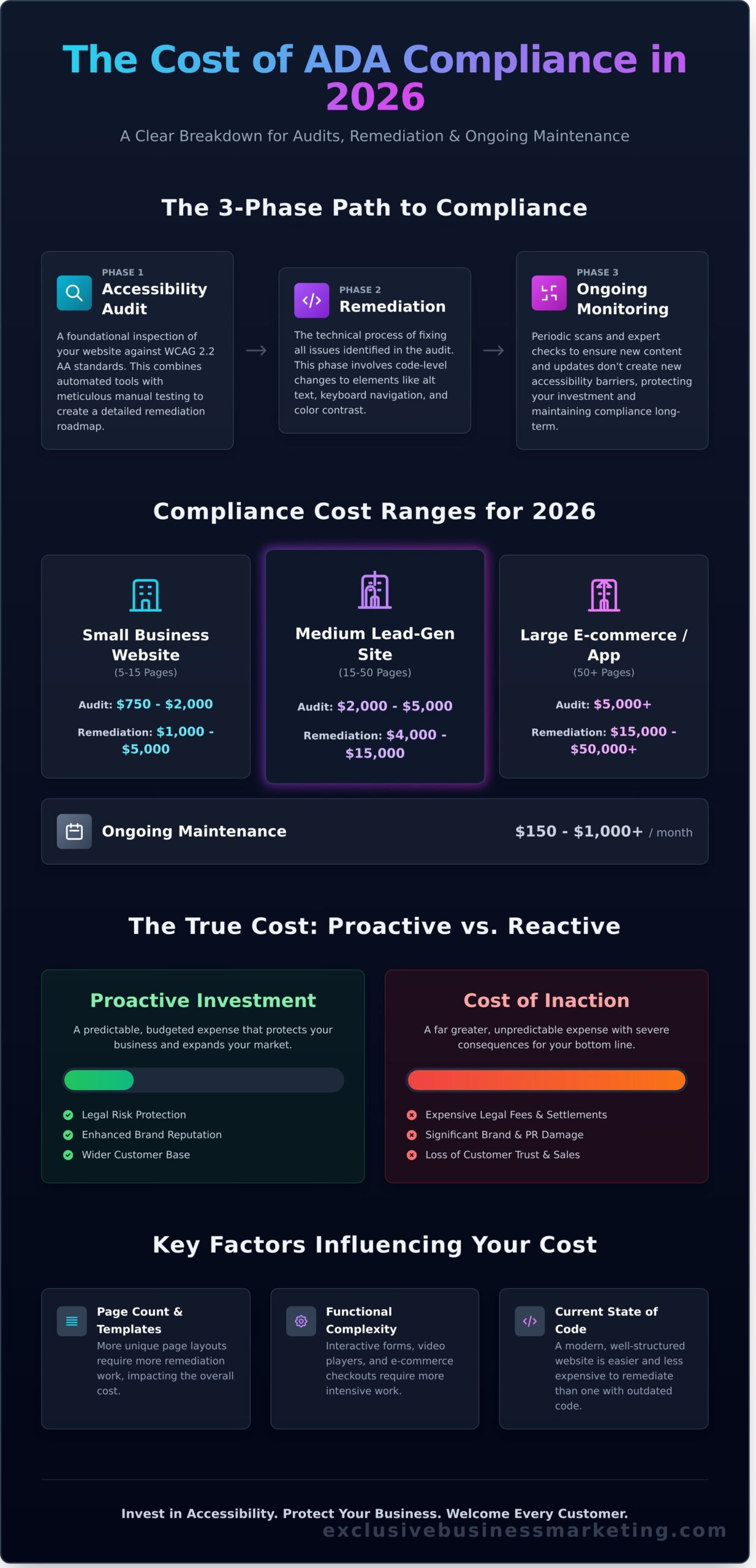
An accessibility audit is the foundational first step. Think of it as a professional inspection of your website’s digital health. Our certified experts conduct a comprehensive review, testing every component against the latest Web Content Accessibility Guidelines (WCAG) 2.2 AA standards. This vital process combines powerful automated scanning tools with meticulous manual testing to catch nuanced issues that software alone misses. The result is a detailed report that serves as your roadmap, pinpointing every barrier and outlining the exact steps needed for remediation.
Phase 2: Remediation (The Fixes)
Remediation is where the plan turns into action. It is the technical process of fixing every issue identified in the audit report. This phase is typically the most significant part of your initial investment, as it involves skilled developers implementing code-level changes. Common fixes include:
- Adding descriptive alt text to all meaningful images.
- Ensuring full keyboard-only navigation for all interactive elements.
- Correcting color contrast ratios for readability.
- Implementing proper ARIA (Accessible Rich Internet Applications) labels.
The complexity and volume of these fixes directly determine the cost.
Phase 3: Ongoing Monitoring & Maintenance
Your website is a living asset. Every new blog post, product update, or design change can inadvertently create new accessibility barriers. Ongoing monitoring is the crucial final phase that ensures you stay compliant. This involves periodic scans and expert checks (often quarterly or semi-annually) to catch and fix new issues before they become legal risks. This proactive approach is the only way to protect your investment and ensure your website remains accessible to all users long-term.
ADA Compliance Cost Ranges for 2026 (Detailed Breakdown)
Understanding the potential investment in accessibility is the first step toward protecting your business and expanding your reach. While the numbers below represent typical market averages for 2026, remember that every website is unique. The final cost to make a website ADA compliant in 2026 is an essential investment to avoid significant financial penalties for non-compliance and connect with a wider audience. As the web evolves, these costs are also influenced by the adoption of newer standards like WCAG 2.2, which sets a higher bar for digital inclusion.
Pricing by Website Size & Complexity
Your investment is typically broken into two phases: a detailed audit to identify issues, followed by remediation to fix them. Here are the expected ranges:
- Small Business Website (5-15 pages): Ideal for local service providers or informational sites.
- Audit: $750 – $2,000
- Remediation: $1,000 – $5,000
- Medium Lead-Gen Site (15-50 pages): Common for B2B companies, professional services, and sites with moderate functionality.
- Audit: $2,000 – $5,000
- Remediation: $4,000 – $15,000
- Large E-commerce or Complex App (>50 pages): For sites with dynamic content, user accounts, and complex transaction processes.
- Audit: $5,000+
- Remediation: $15,000 – $50,000+
- Ongoing Maintenance: Accessibility isn’t a one-time fix. Monthly monitoring and maintenance typically range from $150 to $1,000+, depending on how frequently your site is updated.
Key Factors That Influence Your Final Cost
The price ranges above are wide for a reason. Several key variables will push your project toward the lower or higher end of these estimates:
- Page Count & Template Uniqueness: A 100-page site using only three unique page templates will be far less expensive to remediate than a 20-page site with 20 different layouts.
- Functional Complexity: Features like interactive forms, video players, complex navigation menus, and e-commerce checkout processes require more intensive technical work to become compliant.
- Current State of Your Code: A modern, well-structured website will be easier and cheaper to update than one built on outdated code or a restrictive theme.
- Reporting & Documentation: If you require formal documentation like a Voluntary Product Accessibility Template (VPAT) for legal or corporate purposes, this will add to the project’s scope and cost.
The only way to determine your exact investment is through a professional website accessibility audit. Get a clear, actionable plan and a precise quote to secure your website’s future. Contact us today for a free consultation.
The Hidden Cost of Inaction: Why Waiting Is More Expensive
Many businesses view ADA compliance as just another line-item expense. This is a critical mistake. The reality is that proactive accessibility is a powerful business investment that generates real returns. Delaying action doesn’t save money; it creates significant financial and reputational risks that far exceed the initial cost of compliance. When evaluating the cost to make website ada compliant 2026, the potential price of inaction is the most important number to consider.
Demand Letters and Legal Fees
The first sign of trouble is often a legal demand letter, which can cost between $5,000 and $20,000 just to settle. If the case proceeds to a full-blown lawsuit, your legal defense fees can quickly escalate past $100,000. With thousands of web accessibility lawsuits filed each year, the risk is real and growing. These staggering figures don’t even include the eventual cost of fixing your website-they only cover the legal fallout from failing to act sooner.
Lost Revenue and Missed Opportunities
An inaccessible website actively turns away customers. In the U.S. alone, people with disabilities control nearly half a trillion dollars in disposable income. By ignoring accessibility, you are excluding a massive market segment and leaving money on the table. As Forbes highlights, the business case for accessibility is undeniable, as poor user experience frustrates all visitors, increasing bounce rates and tanking your conversion rates.
Brand Damage and Negative PR
In today’s socially conscious market, an accessibility lawsuit can permanently tarnish your brand’s reputation, painting your company as exclusionary and indifferent. This negative publicity can deter not only customers but also potential business partners and top talent. Conversely, proactively investing in an inclusive digital presence enhances your public image, builds customer loyalty, and demonstrates a tangible commitment to serving everyone in your community.
How to Budget and Reduce Your ADA Compliance Costs
Viewing ADA compliance as a strategic investment rather than a mandatory expense is the first step to managing your budget. It’s not just about avoiding lawsuits-it’s about expanding your market reach and improving the user experience for every single visitor. With smart planning, you can make the process efficient and affordable, turning a requirement into a competitive advantage.
Prioritize Fixes Based on Impact
You don’t have to fix everything at once. A strategic, phased remediation plan allows you to spread the investment over time while immediately addressing the most critical risks. Focus your initial efforts on high-impact areas that directly affect usability and legal exposure.
- Critical Barriers First: Start with issues that completely block access for users with disabilities. This includes enabling full keyboard navigation, adding proper labels to all form fields, and ensuring sufficient color contrast.
- Core User Journeys: Secure the most important pathways on your site. Ensure your checkout process, contact forms, and primary service pages are fully accessible to maximize conversions and minimize risk.
- Create a Roadmap: Plan to tackle less critical issues over the following months. This demonstrates a good-faith effort and makes the financial commitment far more manageable.
Build Accessibility In from the Start
The most effective way to control the cost to make website ada compliant 2026 is to integrate accessibility into your standard design and development workflow. It is significantly cheaper and more effective to build a compliant website from the ground up than to retrofit an existing, non-compliant one. During any redesign project, make WCAG standards a non-negotiable requirement for your development team.
A proactive approach saves thousands in future remediation fees and legal risks. Need an ADA compliant redesign? Get a free quote today.
Choose the Right Partner: Agency vs. Freelancer
Your choice of a compliance partner directly impacts your success and long-term expenses. While a freelancer may seem like a budget-friendly option, they often lack the comprehensive expertise in WCAG guidelines, assistive technologies, and the complex legal landscape.
A specialized agency provides an integrated strategy that connects ADA compliance with your SEO and user experience goals, ensuring the work is not only technically sound but also drives business growth. This holistic approach offers greater legal defensibility and a stronger return on your investment, ultimately lowering the total cost to make website ada compliant 2026.
Reputable IT consulting companies, such as Nanotek, often provide this level of integrated strategy, handling the technical complexities while aligning the project with broader business goals.
Much like how mortgage back office outsourcing allows lenders to focus on growth while experts handle the technicalities of underwriting, a specialized accessibility partner lets you focus on your core business while they secure your digital presence.
Secure Your Business: The Final Word on ADA Compliance Costs
As we’ve detailed, understanding the cost to make website ada compliant 2026 is about more than a price tag-it’s about protecting your investment and expanding your reach. The key takeaways are clear: the expenses of proactive compliance are minimal compared to the staggering financial and reputational damage of a lawsuit. Budgeting for accessibility isn’t just a defensive move; it’s a smart business strategy that opens your doors to millions of potential customers.
Navigating the technical requirements of WCAG 2.2 standards requires proven expertise. Our team of Certified ADA Compliance Professionals specializes in safeguarding businesses just like yours, both in our home of Orange County and nationwide. We remove the guesswork and deliver a clear, actionable plan to achieve and maintain full compliance, giving you complete peace of mind.
Don’t leave your business vulnerable. Take control now and turn compliance into a competitive advantage. Schedule A Call to Get Your Free ADA Compliance Quote & Website Audit and let our experts build a secure digital future for your company.
Frequently Asked Questions About ADA Compliance Costs
Can I just use an accessibility plugin or overlay widget to become compliant?
No. While plugins and overlays claim to be a quick fix, they rarely address the deep, code-level issues required for true ADA compliance. These tools often fail to make a site fully accessible and can even interfere with the assistive technologies your users rely on. Courts have consistently ruled against websites that depend solely on overlays, making manual audits and expert remediation the only reliable path to protect your business and serve all customers.
How long does it take to make a website ADA compliant?
The timeline for ADA compliance varies based on your website’s size, complexity, and current accessibility status. A small, informational website might take a few weeks to audit and remediate. In contrast, a large e-commerce platform with thousands of pages and dynamic features could take several months. A professional audit is the first step to creating a realistic timeline and understanding the full scope of the project and its associated costs.
Is ADA compliance a one-time cost or an ongoing expense?
Achieving ADA compliance involves both an initial investment and ongoing maintenance. The primary cost is the initial audit and remediation to fix all existing accessibility barriers. However, to remain compliant, you must budget for ongoing efforts. This includes regular monitoring, staff training, and ensuring that any new content, features, or design updates also meet WCAG standards. This proactive approach is essential for long-term protection and accessibility.
Are there any tax credits or incentives for making my website accessible?
Yes, the U.S. government offers tax incentives to encourage accessibility. Eligible small businesses may be able to use the Disabled Access Credit (IRS Code Section 44) for a credit of up to $5,000. Additionally, the Barrier Removal Tax Deduction (IRS Code Section 190) allows businesses of any size to deduct up to $15,000 per year for expenses related to removing access barriers. These can help significantly lower the net cost to make website ada compliant 2026.
What is the difference between WCAG 2.1 and WCAG 2.2?
WCAG 2.2 is the newest version and builds upon WCAG 2.1. It includes all previous guidelines and adds nine new success criteria to address more modern web usability challenges, particularly for users with cognitive or motor disabilities. For example, it introduces new standards for focus appearance and dragging movements. To ensure your website is future-proof and offers the best possible user experience, we recommend aiming for WCAG 2.2 Level AA compliance.
Does my small business in California really need to be ADA compliant?
Yes, absolutely. California’s Unruh Civil Rights Act incorporates the ADA, and the state is a major hub for web accessibility litigation, which often targets small businesses. There is no exemption based on company size. Failing to comply puts you at significant risk for demand letters and costly lawsuits. Making your website accessible is a critical business investment to protect your company and serve the millions of Californians with disabilities.