

Avoiding Website Accessibility Lawsuits: 2026 Guide to Choosing a Compliant Agency
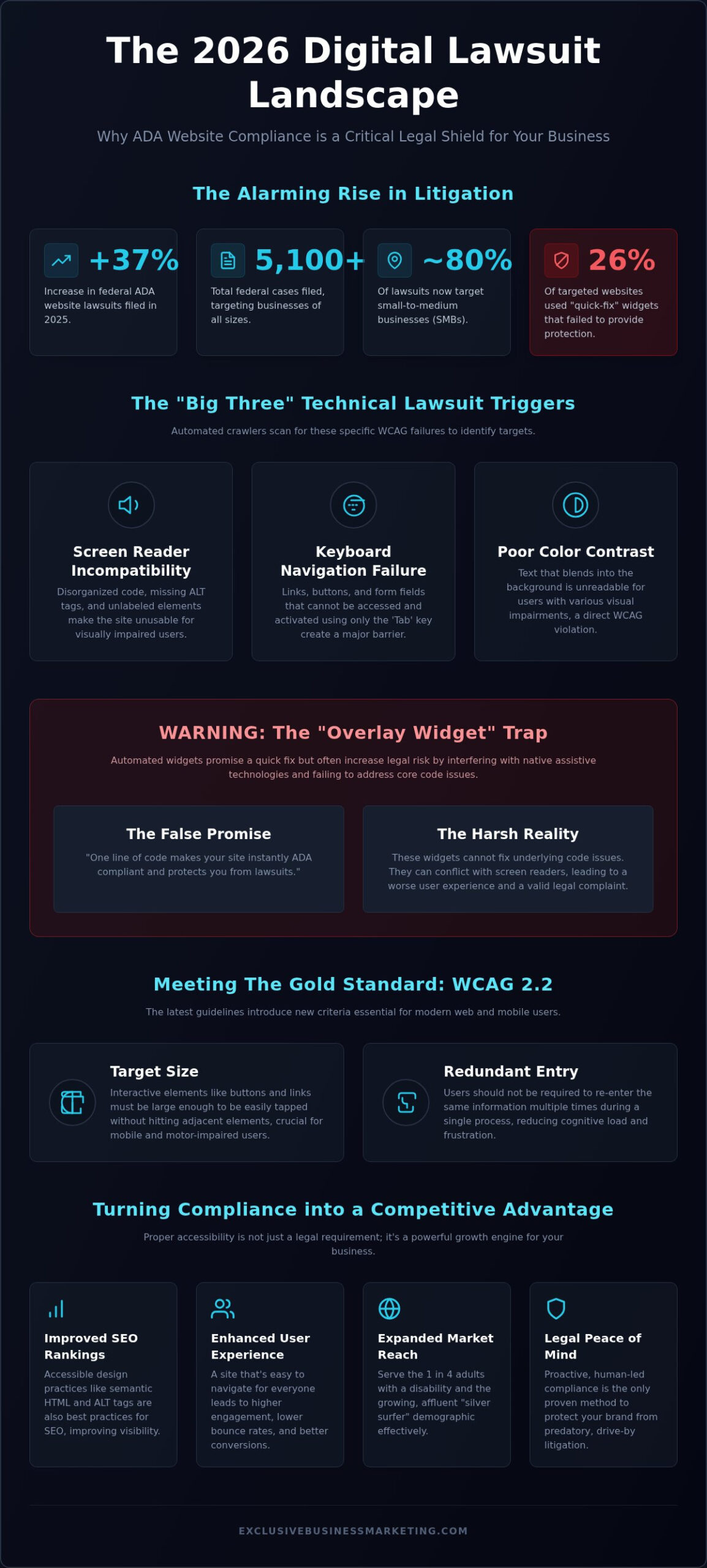
37% more federal ADA website lawsuits were filed in 2025 compared to the previous year, totaling over 5,100 cases. Even more alarming is that 26% of those targeted were using “quick-fix” accessibility widgets that promised protection but failed to deliver. If you’re feeling overwhelmed by the mandatory shift to WCAG 2.2 standards, you aren’t alone. Most business owners are rightfully concerned about predatory “drive-by” litigation but feel lost in complex technical requirements. That’s why choosing an ADA compliance web design agency is no longer just a design choice; it’s a critical legal shield for your brand in 2026.
It’s frustrating to invest in digital growth only to be met with a demand letter because your site fails basic accessibility standards. You deserve legal peace of mind and a high-performance website that serves every visitor effectively. In this guide, you’ll learn how to master the latest WCAG 2.2 requirements and identify the red flags of agencies that overpromise. We provide a clear roadmap for selecting a partner who builds accessibility into your site’s foundation. Let’s secure your digital future and protect your business from unnecessary risk today.
Key Takeaways
- Identify the technical triggers law firms use to target websites, including the “Big Three” failures of keyboard navigation and color contrast.
- Understand why automated widgets can actually trigger a lawsuit by interfering with assistive technologies like screen readers.
- Follow a proven process for choosing an ADA compliance web design agency that uses human-led audits instead of just automated tools.
- Turn compliance into a growth strategy by improving site performance, SEO rankings, and usability for the aging “silver surfer” demographic.
- Master the latest WCAG 2.2 standards to ensure your digital presence acts as a legal shield rather than a liability.
The 2026 Litigation Landscape: Why Your Website is a Target
Courts in 2026 have made one thing clear: your website is a “place of public accommodation” under ADA Title III. This legal classification means that digital storefronts must provide the same level of access as a physical office or retail shop. If a person with a disability cannot navigate your site, you are technically in violation of federal law. This isn’t just a theory; it’s the basis for thousands of legal filings every year. When your site is inaccessible, you aren’t just losing customers; you’re inviting a process server to your door.
Law firms have refined their tactics by using automated “troll” crawlers. These scripts scan thousands of sites per hour, looking for specific technical failures in the Web Content Accessibility Guidelines (WCAG). While enterprise giants once faced the brunt of these cases, the focus has shifted. Roughly 80% of current accessibility lawsuits now target small-to-medium businesses. These firms bank on the fact that SMBs would rather pay a $15,000 settlement than spend $50,000 on a legal defense. Proactive design is the only way to break this cycle, and it starts with choosing an ADA compliance web design agency that prioritizes code integrity over quick fixes.
The California Factor: Navigating the Unruh Civil Rights Act
California remains the national epicenter for digital litigation because of the Unruh Civil Rights Act. Unlike federal law, the Unruh Act allows plaintiffs to claim $4,000 in statutory damages for every single violation. When you multiply that by several accessibility errors, the financial impact is devastating. This high-stakes environment makes choosing an ADA compliance web design agency with local Orange County expertise essential. You need a “local shield” that understands the specific filing trends in California courts and can build a site that stands up to scrutiny.
Digital Accessibility Beyond the Website
Your legal exposure doesn’t end at your homepage. In 2026, mobile apps and even downloadable PDF documents are frequent targets for litigation. While Section 508 regulates government entities, ADA Title III applies to almost every private business. You must ensure that every digital touchpoint meets the latest standards to avoid being an easy target. ADA compliance is a continuous business process, not a one-time fix.
Identifying Digital Tripwires: Technical Triggers for Lawsuits
Technical errors are the primary fuel for the rise in digital litigation. In 2026, the official guidance on web accessibility from the Department of Justice reinforces that WCAG 2.2 is the gold standard for avoiding legal trouble. Law firms use automated tools to scan for specific “tripwires” that signify a site is neglected. If your site triggers these crawlers, you’re likely to receive a demand letter regardless of your business size. Choosing an ADA compliance web design agency that understands these technical nuances is the only way to stay off the radar of predatory litigants.
Most lawsuits stem from the “Big Three” accessibility failures. First is screen reader incompatibility; if your code is disorganized, software used by blind users cannot interpret the content. Second is keyboard navigation. Every button, link, and form field must be reachable using only the “Tab” key. Third is color contrast. Text that blends into the background isn’t just a design flaw; it’s a barrier for users with visual impairments. When these basics are missing, your site becomes a high-priority target. You can verify your current standing by requesting a professional accessibility audit to catch these errors before a lawyer does.
Forms and checkout processes carry the highest risk. If a customer can’t complete a purchase or contact your team because of an inaccessible form, the settlement demands often skyrocket. This is because “denial of service” is easier to prove in court than simple navigation issues. Proper focus indicators are also vital. These are the visual outlines that appear around elements as a user tabs through the site. Without them, users with motor impairments are essentially navigating in the dark.
WCAG 2.2: New Standards for a Modern Web
The update to WCAG 2.2 introduced specific requirements for mobile users and those with cognitive disabilities. The “Target Size” rule now mandates that interactive elements be large enough to be easily tapped. Additionally, “Redundant Entry” rules prevent sites from making users re-enter the same information twice during a single session. Modern minimalist design trends often hide these essential elements, which can accidentally trigger non-compliance if your designer isn’t an accessibility expert.
The Role of Assistive Technology
Assistive technologies like JAWS and NVDA rely on semantic HTML to function. This means using tags like <header>, <nav>, and <button> correctly rather than relying on generic containers. ARIA labels provide additional context, telling the user what a button does even if there is no visible text. Choosing an ADA compliance web design agency ensures your site has a robust digital foundation that speaks clearly to every user and every device.
The Overlay Trap: Why Automated Widgets Increase Your Risk
Many business owners fall for the “one-line-of-code” promise. Accessibility overlays and widgets are marketed as a magic bullet that instantly makes a site compliant. In reality, these tools are often a liability. They function as a JavaScript layer that attempts to fix code on the fly, but they rarely address the underlying structural issues. Instead of providing true access, they often create a frustrating experience for users with disabilities. This is why choosing an ADA compliance web design agency that builds accessibility into the core code is the only way to ensure long term safety.
Technical data shows that overlays frequently interfere with assistive technology. A screen reader user has already configured their software to navigate the web efficiently. When an overlay forces its own set of controls onto the page, it often overrides the user’s personal settings. This conflict makes the site harder to use, not easier. For a deeper look at the foundational principles these widgets often ignore, consult the W3C Introduction to Web Accessibility. True compliance requires a seamless experience, which only professional ADA compliant website design can provide.
Law firms now specifically target websites that use these widgets. In January 2026, over 26% of accessibility lawsuits were filed against sites that had an overlay installed. To a predatory litigant, a widget icon is a neon sign indicating that the business owner hasn’t actually audited their source code. It signals a lack of genuine effort, making the site an easy target for a demand letter. Don’t let a “quick fix” become your biggest legal vulnerability.
Automated Checkers vs. Human-Led Audits
Software scanners are helpful, but they only catch roughly 30% of actual accessibility barriers. They can detect a missing alt-tag, but they can’t tell you if that tag actually describes the image accurately. Human-led audits are essential. Experts who use assistive technology daily can identify logical flow issues and navigation roadblocks that code alone will miss. A professional audit report is a powerful asset when choosing an ADA compliance web design agency because it proves you’re taking comprehensive action.
Building a Good Faith Defense
Documenting your progress is a key strategy for deterring lawsuits. A clear remediation roadmap shows that you’re actively working toward a better user experience. Pair this with a transparent Accessibility Statement that provides a direct way for users to report issues. Continuous monitoring is also vital. Websites change every time you post a blog or update a product. Regular check-ins prevent “compliance drift” and keep your digital shield strong against evolving legal threats.
5 Steps to Choosing the Right ADA Compliance Agency
Finding a partner to secure your digital presence is a high-stakes decision. You aren’t just hiring a designer; you’re hiring a legal safeguard. Many firms claim to “do ADA,” but few have the technical depth to withstand a legal challenge. Follow these five steps when choosing an ADA compliance web design agency to ensure your business is truly protected.
- Step 1: Verify WCAG 2.2 Knowledge. Ask the agency to explain the specific changes in the 2026 standards. If they can’t discuss “Target Size” or “Redundant Entry,” they aren’t ready for modern compliance needs.
- Step 2: Audit Their Portfolio. Don’t take their word for it. Run their previous work through an independent checker like WAVE or AXE. If their “compliant” sites show errors, yours will too.
- Step 3: Demand Manual Testing. Automated tools are a start, but they aren’t enough. Ask if they use actual screen readers like JAWS or NVDA. If they don’t test with assistive technology, they’re guessing.
- Step 4: Review Their Remediation Strategy. A professional firm provides a comprehensive accessibility audit and a clear remediation plan. You need to see exactly what will be fixed and how.
- Step 5: Check California Expertise. Ensure they understand the specific nuances of the Unruh Civil Rights Act. A local partner knows the local litigation landscape and the specific triggers that attract California law firms.
Evaluating the Agency’s Audit Process
A generic summary isn’t an audit. You need a line-by-line remediation report that identifies every single failure point. Ask how they handle complex third-party integrations. Maps, video players, and payment gateways are notorious for accessibility issues. Your agency must have a plan to make these elements compliant or find accessible alternatives. Finally, ask if they provide a formal certification of compliance. This document is a vital part of your good-faith defense if a claim ever arises.
Long-Term Support and Maintenance
Compliance isn’t a “one and done” project. Every time your team adds a new blog post or product, you risk introducing new errors. Your agency should train your staff on how to upload accessible content, from alt-text for images to proper heading structures. Inquire about quarterly compliance check-ups to catch “compliance drift” before it becomes a legal liability. Partnering with a local SEO company near me that understands ADA ensures your site stays visible, fast, and legally sound. Choosing an ADA compliance web design agency with a long-term mindset is the only way to maintain your digital shield in 2026.
Turning Compliance into a Competitive Growth Engine
Inclusive design isn’t just a legal requirement; it’s a massive financial opportunity. When you prioritize accessibility, you’re opening your digital doors to a segment of the population that controls significant spending power. Roughly 1 in 4 adults in the United States lives with a disability. Ignoring this audience means leaving up to 25% of your potential market share on the table. By choosing an ADA compliance web design agency that understands the “Purple Pound,” you position your brand as a market leader that values every customer.
Accessible websites provide a superior User Experience (UX) for everyone, not just those with permanent disabilities. Think of the “silver surfer” demographic. As users age, they often require larger text, higher color contrast, and more intuitive navigation. Features that help a blind user navigate via a screen reader also help a busy parent using a voice assistant or a commuter in a high-glare environment. High-quality Orange County web design focuses on these universal usability principles to drive higher conversion rates and long term customer loyalty.
The SEO-Accessibility Synergy
There’s a powerful overlap between technical SEO and digital accessibility. Google’s search bots function much like a screen reader; they “read” your code to understand what your page is about. When you use proper heading structures (H1, H2, H3) and descriptive alt text for images, you’re providing the exact signals search engines need to index your site accurately. A site that’s easy for a person with a disability to navigate is also easy for a search engine to crawl.
Modern SEO also prioritizes Core Web Vitals, which measure site speed and visual stability. Many WCAG requirements, such as avoiding flashing content and ensuring predictable layouts, directly improve these performance metrics. Sites with clean, semantic code rank higher and load faster. Choosing an ADA compliance web design agency ensures your technical foundation is optimized for both human users and search algorithms.
Choosing a Full-Service Strategic Partner
Accessibility shouldn’t be an afterthought or a separate silo. The most cost-effective way to protect your business is to integrate SEO services in Orange County with your compliance strategy from day one. This holistic approach ensures that every marketing dollar spent also strengthens your legal shield. Exclusive Business Marketing handles the complex technical heavy lifting, allowing you to focus on scaling your operations without the fear of predatory litigation.
Don’t wait for a demand letter to take action. Secure your business today with a professional 2026 compliance audit and transform your website into a high-performance, inclusive growth engine. We are ready to build a digital presence that protects your brand while driving measurable revenue results.
Secure Your Digital Future with Proactive Compliance
The 2026 digital landscape is unforgiving to businesses that rely on automated shortcuts. You’ve seen how predatory law firms use crawlers to find vulnerabilities and why widgets often increase your risk of a lawsuit. By prioritizing manual testing and foundational code integrity, you protect your brand from the heavy statutory damages of the Unruh Act while simultaneously boosting your search engine rankings. True accessibility is a competitive advantage that opens your business to a massive, underserved market share.
The process of choosing an ADA compliance web design agency should focus on technical depth and a proven remediation roadmap. Exclusive Business Marketing serves as your local shield, providing California-based expertise in Unruh Act litigation defense. We combine full-service WCAG 2.2 remediation with integrated SEO strategies to ensure your investment drives maximum ROI. It’s time to stop worrying about “compliance drift” and start focusing on your growth.
Don’t let your website be an easy target for litigation. Take the first step toward a high-performance, inclusive digital presence that welcomes every visitor. We’re ready to help you achieve long-term legal peace of mind and measurable growth. Let’s secure your brand today.
Frequently Asked Questions
Can a small business be sued for website accessibility under the ADA?
Yes, small businesses are now the primary targets for digital litigation. In 2025, there were over 5,100 federal ADA website lawsuits filed, representing a 37% increase from the previous year. Plaintiffs’ firms use automated tools to find vulnerabilities on smaller sites, assuming these owners will settle quickly. This high risk makes choosing an ADA compliance web design agency a vital step for every business owner, regardless of company size.
What is the Unruh Civil Rights Act and why does it matter for my website?
The Unruh Civil Rights Act is a California law that provides for $4,000 in statutory damages per violation, plus attorney’s fees. Because California courts interpret the ADA to apply to websites, any accessibility error on your site can trigger these heavy financial penalties. This act is the reason California is the national epicenter for digital lawsuits. It makes local expertise essential for protecting your business from predatory legal claims.
How much does it typically cost to settle an ADA website lawsuit in 2026?
A typical demand letter settlement in 2026 ranges between $5,000 and $25,000. If the case proceeds to a federal lawsuit, costs can escalate from $15,000 to over $75,000. These figures don’t include the cost of actually fixing the website. Proactive remediation is always more cost-effective than paying for a legal settlement and defense after being targeted by a law firm.
What is the difference between WCAG 2.1 and WCAG 2.2 standards?
WCAG 2.2 is the current official standard, building upon the requirements of version 2.1. It includes nine additional success criteria specifically focused on improving accessibility for users with cognitive disabilities and those using mobile devices. Key additions include “Target Size” for touch elements and “Redundant Entry” to reduce cognitive load. When choosing an ADA compliance web design agency, ensure they are fluent in these 2.2 standards.
Is an accessibility overlay plugin enough to protect me from a lawsuit?
No, an overlay plugin is often a liability rather than a solution. In January 2026, over 26% of accessibility lawsuits were filed against websites that used these widgets. Overlays often interfere with screen readers and don’t fix the underlying source code errors that crawlers detect. Predatory law firms specifically scan for these plugins to identify businesses that haven’t performed a thorough, manual accessibility audit of their site.
Do I need to make my mobile app ADA compliant as well?
Yes, mobile apps are considered “places of public accommodation” under ADA Title III. Courts have consistently ruled that digital services, including apps and downloadable PDFs, must meet accessibility standards. If your app is not compliant, it presents the same legal risk as an inaccessible website. Ensure your design partner has experience with mobile accessibility to cover every digital touchpoint where a customer interacts with your brand.
What should I do immediately if I receive an ADA demand letter?
You should contact a qualified attorney and an accessibility expert immediately. Don’t ignore the letter, as this often leads to a formal lawsuit. Your next step is to perform a comprehensive audit to identify the specific violations mentioned. A documented remediation plan serves as a strong defense, showing the court you’re taking “good faith” steps to resolve the issues. Acting quickly can often lead to a lower settlement.
How often should I audit my website for accessibility compliance?
You should perform a technical audit at least quarterly or after any major content update. Websites are dynamic; every new blog post, product listing, or plugin update can introduce new accessibility barriers. Constant monitoring is required to prevent “compliance drift.” Regular check-ups ensure your digital shield remains strong and that your site continues to provide a high-performance experience for every visitor.